How to Reduce PDF Size Without Losing Quality
Learn practical ways to reduce PDF size while keeping text and images readable. This visual guide explains how smart downsampling optimizes photographs while keeping vector typography crisp.
When This Method Works Well
- •Client proposals, resumes, and portfolios where visual presentation matters
- •Balancing file weight with readable typography and crisp diagrams
- •Documents intended for both screen viewing and desktop printing
When It Doesn’t Work or Has Limits
- •Ultra-fine art prints requiring 1200 DPI archival reproduction
- •PDFs that consist only of plain text
Key Principles & Takeaways
- Vector typography is defined by mathematical curves, allowing text to remain sharp even when embedded images are compressed
- Downsampling high-resolution print images eliminates unnecessary byte weight while keeping on-screen photos clear
- Stripping redundant metadata and color profiles saves kilobytes without touching visual pixels
- Always open the compressed file and check its quality before submitting it
Step-by-Step Instructions
Open the Compressor
Visit our online tool.
Choose Recommended Quality
Select the Recommended preset to optimize image resolutions while preserving fine color gradients.
Process File Locally
Run the compression directly in your browser.
Inspect Typography and Graphics
Zoom in to verify that text, logos, and charts remain sharp before distributing.
Visual Comparison Workflow
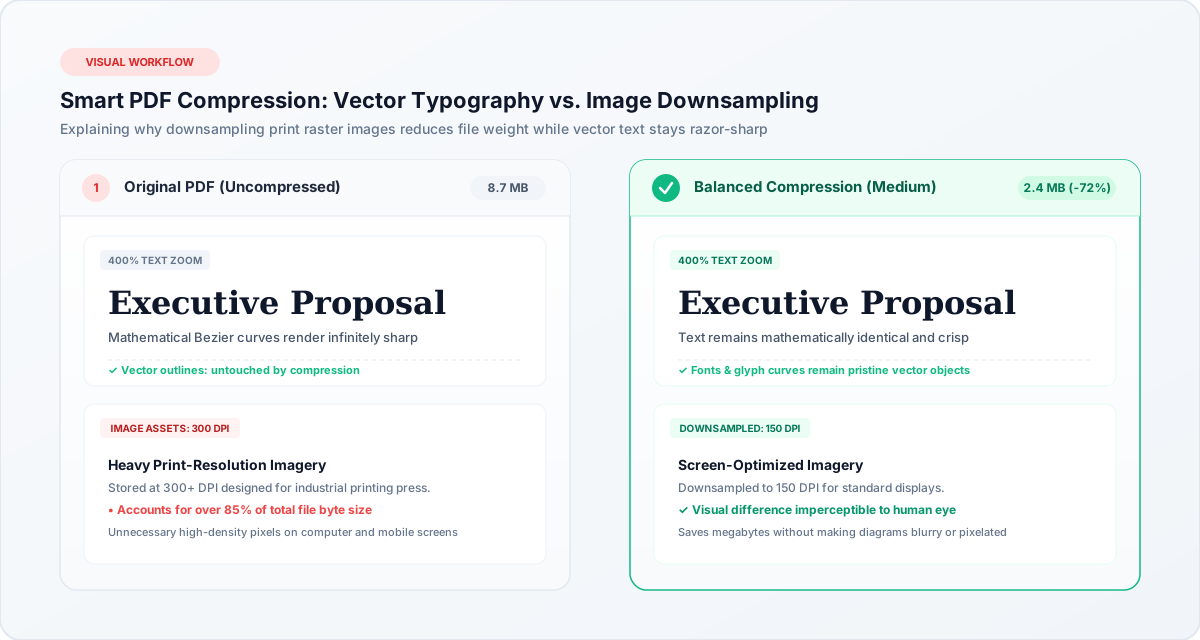
Original PDF: 8.7 MB (Uncompressed 300 DPI print images and embedded assets).
Compression Applied: Medium Preset (Downsamples photos to standard screen resolution while keeping vector font definitions intact).
Compressed PDF: 2.4 MB (72% smaller file size, text remains sharp and readable, images remain acceptable).
Vector Elements vs. Raster Elements
PDFs contain two primary types of assets: vector data (text letters, brand logos, table outlines) and raster data (photographs and scanned bitmaps). Vector graphics are defined by mathematical curves. When a PDF is compressed, the vector definitions remain untouched, ensuring that your text and charts remain sharp at any zoom level.
Ready to work on your file? Try our Compress PDF tool
Client-side processing: For supported tools, your files are processed locally in your browser and are not uploaded to our server. Fast, free, and accessible on any device.
Frequently Asked Questions
Why does text remain clear after compression?
Because standard fonts and vector shapes are stored as mathematical curves rather than fixed pixels, allowing them to render sharply at any scale.
What compression preset should I choose?
Choose Recommended or Medium compression for standard documents. This removes background metadata and excessive DPI while retaining clear imagery.